

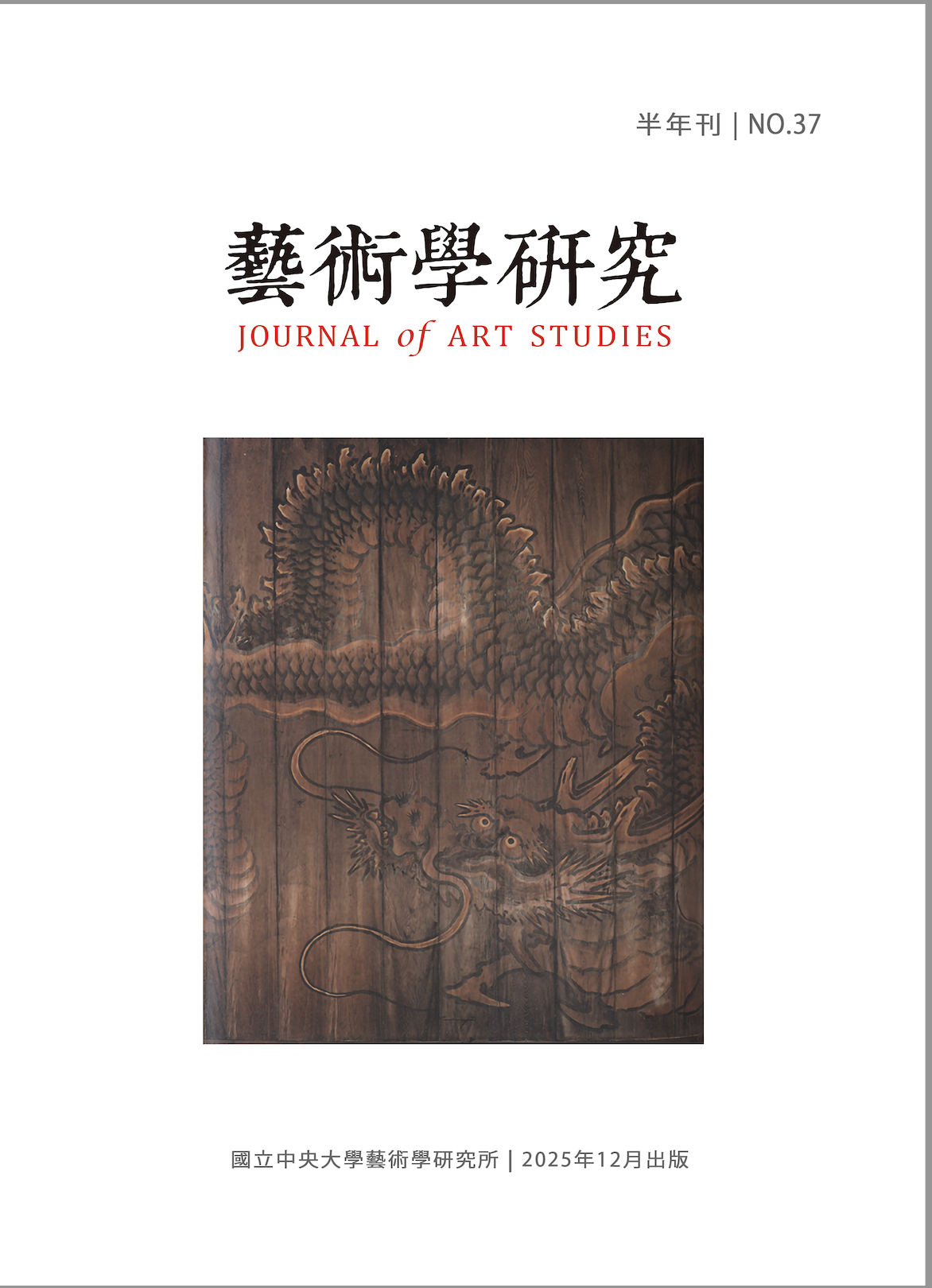
本文考察江戶前期京狩野所繪製的《蟠龍圖》,釐清其圖像源流與發展系譜,以及京狩野在建立此系譜中所扮演的角色。在目前的江戶前期寺院天井蟠龍圖中,正保四年(1647)狩野山雪(1590-1651) 繪製於京都泉涌寺舍利殿的《雲龍圖天井畫》為代表性巨製。有鑑於這幅天井龍圖的重要性,本文聚焦於此圖,並與其他桃山至江戶前期畫家的蟠龍圖以及狩野山雪的龍圖相互比較,討論其風格系譜與圖像意義,並重新認識該圖做為寺院天井圖像的宗教功能。《雲龍圖天井畫》中的龍形已可見於狩野山雪其他年代較早的龍圖。由此可推測,狩野山雪有意塑造具有高度一致性、可辨識性的個人龍圖風格。整體而言,狩野山雪結合牧谿與陳容的龍圖,龍首兼具牧谿與陳容(1189- 1268)龍圖的因素,身軀姿態則主要依據陳容的龍圖傳統。
鎌倉初期俊芿(1166-1227)於京都東山創設泉涌寺,其僧規、禮儀頗能體現南宋佛教文化。日本安貞二年(1228)俊芿的弟子湛海 (1182-?)自明州(今浙江寧波市)白蓮寺迎回佛牙舍利,目前安放於泉涌寺舍利殿內陣。 此佛牙舍利相傳曾為唐代道宣( 596-667)所持,可推測泉涌寺僧藉此傳說來建立舍利的宗教權威,宣揚承繼道宣南山律宗的正統性。龍被視為佛塔與舍利的守護神,泉涌寺舍利殿《雲龍圖天井畫》中龍的視線朝向門口,身軀攀附於內陣上側,應具有守護舍利的意涵。狩野山雪巧妙地將牧谿龍圖中朝上的眼神運用於舍利殿的建築空間,既能符合舍利殿的宗教功能,也藉此再次確認並展現其自身畫業與牧谿典範之間的連結。
The present paper examines the ascending dragon paintings (banryu zu; banryu also known as the “coiled dragon”) of the Kyo Kano school in the early Edo period to clarify the genealogy – specifically the origin and development – of the images as well as the role of Kyo Kano in establishing this history. Among early Edo temple “mirror ceilings” of ascending dragons, Mirror Ceiling Painting of Dragon in Clouds, painted by Kano Sansetsu (1590–1651) in the Hall of Shari at Sennyuji Temple in Kyoto in the fourth year of the Shoho era (1647), is regarded as representative within the form. Considering its importance, this paper focuses on comparing the work with other ascending dragon paintings from the Momoyama to Edo periods, and with other paintings that incorporate dragon motifs by Kano. The paper discusses its stylistic genealogy and significance underlying the image as well as revisiting its religious function as a temple mirror ceiling. Specifically, Kano integrates the works of Chinese painters Muxi (fl. 13th century) and Chen Rong (1189–1268), with the head comprising elements of both and the posture of the body being mainly based on the genealogy of the latter’s paintings.
Mirror Ceiling Painting of Dragon in Clouds painted by Kano Sansetsu is a representative work of Kyo Kano's dragon painting and a monument to the later years of his painting career. In Mirror Ceiling Painting of Dragon in Clouds, Kano Sansetsu uses Chen Rong's dragon picture model to depict the main body of the dragon. In terms of the upward gaze, he returns to Muxi,integrating the two Southern Song Dynasty dragon pictures represented by Muxi and Chen Rong. As for the representation of the dragon head, Kano Sansetsu combined the characteristics of Muxi and Chen Rong traditions at the same time, and found a personal way of depicting the dragon head. As for the performance of the dragon body, since the body in Muxi's "Dragon Picture" is mostly hidden in the clouds and mist, the complex and changeable dragon shapes in Chen Rong's tradition can make up for its shortcomings. Various works attributed to Chen Rong in the Ming Dynasty provided specific models for Kyokano. In addition, the method of combining geometric composition with dragon pictures is not seen in the tradition of dragon pictures. It is an innovation of Kano Sansetsu, and it is also a personal characteristic that is different from other Kano school painters.
In the second year of the Antei era (1228), monk Tankai (1182–?) was commissioned to travel to Song China and bring back a Buddha tooth relic from Bailian Temple in Mingzhou (present-day Ningbo, Zhejiang), which is currently placed in the inner row of the Hall of Shari. This Buddha tooth relic was said to have been held by monk Daoxuan (596–667) of the Tang dynasty; and it can thus be inferred that Sennyuji Temple employed this legend to establish the religious authority of the relic and to both inherit and propagate the legitimacy of the Nanshan Vinaya tradition of Daoxuan. Dragons are regarded as the guardians of stupas and relics, and the one in Mirror Ceiling Painting of Dragon in Clouds faces the temple entrance with its body positioned above the inner row, likely denoting it as guardian of the relics. By artfully applying the upward-facing eyes within Muxi dragon paintings to the architectural space, Kano Sansetsu both fulfills the religious function of the Hall of Shari and reconfirms the link between his own painting style and the legacy left by Muxi.